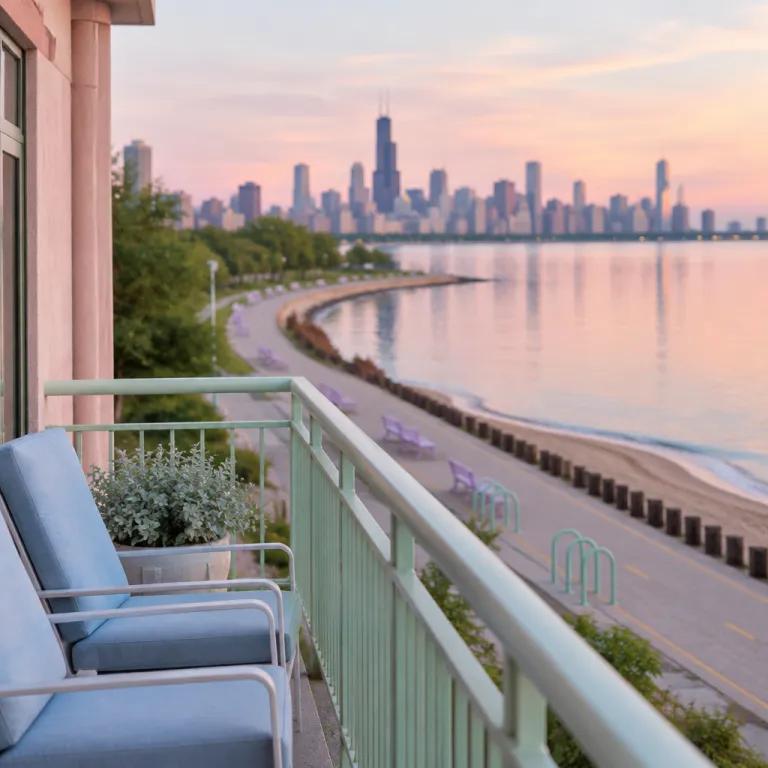
How the Chicago Lakefront Trail shapes your hotel choice
The Chicago Lakefront Trail runs for about 30 kilometres along Lake Michigan, and it quietly dictates which hotels offer the most rewarding stays. This long paved waterfront route in Chicago, Illinois links major parks, beaches, museums, and stadiums, so choosing a room near the right access points can transform a standard booking into a true lakefront escape. When you understand the most useful Chicago Lakefront Trail things to know, you can align your hotel location with the way you like to walk, bike, or relax by the water.
Think of the trail as the city’s outdoor spine, with the north section, central section, and south section each offering a different mood and different nearby hotels. The north stretch of the Lakefront Trail near Lincoln Park, Montrose Beach, and Oak Street Beach feels residential yet lively, while the central corridor by Millennium Park, Grant Park, and the Museum Campus places you in the cultural heart of the city. Farther south, around Jackson Park, Promontory Point, and South Shore, the lakefront experience becomes quieter and more local, which can suit travellers who prefer calmer parks and less crowded paths.
For many guests, the best Chicago stays are those where you can step out of the lobby and be on the path within minutes. If you plan early morning running sessions, sunset walks along the Chicago lakefront, or daily bike rides, you should filter hotels by distance to the shoreline and to specific access points rather than only by price. This city rewards travellers who treat the Chicago Lakefront Trail as a primary amenity, not just a scenic extra.
North, central, and south segments: matching neighbourhoods to your stay
The north segment of the Chicago Lakefront Trail stretches roughly from Montrose Beach down past Lincoln Park, and it is ideal if you want a hotel in a lively yet relaxed part of the city. Here, parks and beaches sit side by side, with the park lawns, tree lined trails, and the wide lakefront giving you easy access to running, cycling, and casual strolls. Hotels near this area often place you within walking distance of Oak Street Beach, Lincoln Park Zoo, and residential streets that feel calmer than the downtown core.
In the central section, between Navy Pier and the Museum Campus, the Lakefront Trail intersects with some of the best known landmarks in Chicago, Illinois. Staying near this corridor keeps you close to Millennium Park, Grant Park, the Art Institute, and the long promenade of Navy Pier, while the path itself offers some of the most dramatic water and skyline views. If you want to explore museums by day and return to the lakefront for an evening walk, this central stretch of trail in Chicago is often the best compromise between culture, dining, and outdoor access.
The south portion of the Chicago Lakefront Trail things to know includes quieter stretches around Jackson Park, Promontory Point, South Shore, and the green spaces near the University of Chicago. Hotels are more dispersed here, but the reward is a more tranquil park atmosphere, wider lawns, and less crowded paths for bike rides or long runs. Travellers who value peaceful parks, historic landscapes, and easy access to the water often find that the south lakefront offers the best Chicago sense of retreat within the city.
Access points, safety, and how you will move along the path
Before you book, study where the nearest access points to the Lakefront Trail sit in relation to your preferred hotel. Some properties are directly on the lakefront with a short path leading to the main trail, while others require a five to ten minute walk along a busy street before you reach the water. If you plan to use the trail several times a day, that difference in distance and street crossings can significantly affect how often you actually go out.
The Chicago Park District, which manages the trail, notes that the path is open during normal park operating hours and that it is open year round, though winter conditions can limit access in some sections. In their own words, "Check weather before visiting. Be aware of trail rules. Stay hydrated." For hotel guests, that means you should ask about winter maintenance near the lakefront, lighting along nearby paths, and whether the hotel provides secure storage for a bike or other equipment you plan to use on the trails.
Safety on the Chicago Lakefront Trail has improved since the trail separation project, which created distinct lanes for bikes and for pedestrians along many sections. When you choose a hotel, consider whether you will mainly be running, walking, or cycling, and then focus on segments where the separated path is complete and clearly marked. Families with children often prefer parks and beaches where the pedestrian path is set back slightly from the bike lane, especially near busy areas such as Navy Pier, the Museum Campus, and the approaches to Soldier Field.
Choosing the right activities: running, cycling, and relaxed lakefront days
Your preferred activities along the Chicago Lakefront Trail should guide which part of the city you choose for your stay. Runners often favour the long, relatively uninterrupted stretches between Montrose Beach and Lincoln Park, or between Grant Park and the Museum Campus, where the path is wide and the water views are constant. Cyclists and e scooter users need to pay closer attention to local rules, because shared e scooters are currently prohibited on the main trail even though private bikes and scooters remain common.
If you are planning a cycling focused visit, look for hotels that either rent bikes directly or sit close to reputable rental shops near the lakefront. The best Chicago experiences for cyclists usually involve early morning rides along the north and south segments, when the path is quieter and the light over Lake Michigan is soft, followed by midday breaks in parks such as Grant Park, Jackson Park, or Northerly Island. For guests who prefer a slower pace, a hotel near a major beach such as Montrose Beach, Oak Street Beach, or North Avenue Beach allows you to combine short walks on the path with long hours by the water.
Travellers who enjoy culture as much as outdoor activity should consider hotels that sit between Millennium Park and the Museum Campus, where you can move easily between museum visits and lakefront strolls. From this central base, you can walk the path south towards Soldier Field and Northerly Island or north towards Navy Pier and Lincoln Park without needing a car. When you understand these Chicago Lakefront Trail things to know, you can match your hotel to the mix of running, cycling, and relaxed park time that suits your trip.
Key landmarks along the trail and how they affect your stay
Several major landmarks sit directly on or beside the Chicago Lakefront Trail, and their presence can strongly influence where you should book your room. Navy Pier anchors the central lakefront with its Ferris wheel, restaurants, and boat tours, so hotels nearby are ideal if you want constant activity and easy evening walks along the pier. Just inland, Millennium Park and Grant Park form a continuous green corridor that connects the city’s cultural core to the water, making nearby hotels attractive for guests who want both skyline views and quick access to the path.
South of the central business district, the Museum Campus gathers the Field Museum, Shedd Aquarium, and Adler Planetarium on a peninsula that juts into Lake Michigan. The Lakefront Trail curves around this area, offering some of the best panoramic views of the city skyline and the water, and hotels within walking distance are perfect for families who want to combine museum days with outdoor time. Nearby, Soldier Field and Northerly Island add stadium events and quiet parkland to the mix, so it is worth checking event calendars when you choose dates, as big games or concerts can affect traffic and noise levels.
Farther north and south, landmarks such as Lincoln Park, Montrose Beach, Jackson Park, Promontory Point, and South Shore define more residential and local stretches of the Chicago lakefront. A hotel near Lincoln Park or Montrose Beach suits guests who want easy access to both parks and neighbourhood restaurants, while a stay near Jackson Park or Promontory Point offers a more contemplative atmosphere with historic landscapes and wide lawns. When you map these landmarks against your preferred activities, you turn a simple search for trail Chicago accommodation into a targeted hunt for the best Chicago base along the lakefront.
Practical planning tips for hotel guests using the Chicago Lakefront Trail
Once you have chosen your preferred segment of the Chicago Lakefront Trail, refine your hotel shortlist with a few practical checks. Confirm whether the property offers secure storage for a bike, running gear, or strollers, especially if you plan to use the path daily. Ask the front desk about the nearest access points to the lakefront, typical walking times to the water, and whether any busy street crossings are involved.
Weather in Chicago, Illinois can change quickly, so consider how your hotel will support you in rain, wind, or heat. Properties close to the lakefront often feel cooler in summer because of breezes off Lake Michigan, but they can also be windier in colder months, which matters if you plan long runs or walks on the path. Since the trail is open during normal park hours and open year round, you should ask about nearby cafés or indoor spaces where you can warm up or cool down after time on the trails.
Finally, integrate the Chicago Lakefront Trail things to know into your daily itinerary rather than treating the path as a one time outing. Plan morning running sessions before breakfast, midday walks between museum visits, and evening strolls from your hotel to a nearby park or beach. When you choose a property that aligns with the lakefront, the trail Chicago experience becomes the quiet thread that ties your entire stay in the city together.
Key figures about the Chicago Lakefront Trail for hotel planners
- The Chicago Lakefront Trail extends for approximately 18.5 miles, or about 30 kilometres, which means guests can access a wide variety of parks, beaches, and neighbourhoods from a single well chosen hotel base (Chicago Park District data).
- On peak summer days, the trail sees up to 70,000 users, so travellers who prefer quieter running or cycling sessions should consider early morning or shoulder season stays to avoid the busiest times (Chicago Park District data).
- The trail was first established in the early nineteen sixties and has since undergone major improvements, including a separation project that created distinct lanes for cyclists and pedestrians, which significantly enhances safety for hotel guests using the path (Chicago Park District historical information).
- The Navy Pier Flyover, a dedicated elevated path near Navy Pier, now allows smoother movement for people walking and cycling between the central business district and the Museum Campus, making hotels in this corridor especially convenient for car free visitors (City of Chicago infrastructure reports).
FAQ: Chicago Lakefront Trail and hotel stays
Is the Chicago Lakefront Trail open all year for hotel guests ?
The trail is open year round during normal park operating hours, so guests can walk, run, or cycle in every season. In winter, snow, ice, and high waves can temporarily limit access in some sections, especially near exposed parts of the lakefront. Before you travel, check recent conditions with the Chicago Park District or your hotel concierge.
Are e scooters and bikes allowed on the trail near my hotel ?
Private bikes are welcome on the Chicago Lakefront Trail, and many hotels either rent bicycles or can direct you to nearby rental shops. Shared e scooters, however, are currently prohibited on the main path, so you should not plan to use dockless scooters along the lakefront. If you rely on a bike or scooter, confirm storage options and nearby rental services when booking your stay.
Which part of the trail is best for first time visitors staying downtown ?
First time visitors who stay in the central business district usually find the segment between Navy Pier and the Museum Campus most convenient. This stretch passes Millennium Park, Grant Park, and the main museums, while offering some of the best skyline and water views. Hotels in this area make it easy to combine cultural visits with daily walks or runs along the path.
How close should my hotel be to the lakefront if I plan to run daily ?
If running is a priority, aim for a hotel within a five to ten minute walk of a clear access point to the trail. Shorter distances and fewer busy street crossings make it more likely that you will actually maintain your routine. When comparing properties, use maps to trace the exact path from the lobby to the lakefront rather than relying only on straight line distance.
Which beaches and parks along the trail are easiest to reach without a car ?
From central hotels, North Avenue Beach, Oak Street Beach, and the lawns of Grant Park and Millennium Park are all reachable on foot via the Lakefront Trail. Guests staying slightly north can reach Lincoln Park and Montrose Beach easily, while those farther south can walk or cycle to Jackson Park, Promontory Point, and South Shore. Choosing a hotel near a major transit line also helps you move between different parks and beaches without needing a car.
Sources
- Chicago Park District
- City of Chicago
- Choose Chicago tourism board