Where to eat in Chicago Loop when you first arrive
Landing in Chicago and checking into a Loop hotel, you immediately face the question of where to eat in Chicago Loop without wasting precious time. For many travellers the best strategy is to focus on Chicago restaurants within a short walk of the central hotels, using the grid of the Loop as your personal food map. This keeps your first meal simple yet still lets you feel the energy of the city right away.
Beatrix on North Wacker Drive (519 N Wacker Dr; typically open from early breakfast through late evening) is a Chicago restaurant that works beautifully after a long flight, because its all day menu covers breakfast, lunch, and relaxed evening dining with equal ease. You can order light, vegetable forward food or go straight for hearty comfort dishes, which makes it one of the best restaurants in the Loop for mixed groups or jet lagged colleagues. Many guests staying near the Chicago River mark Beatrix as their go to spot on a personal map of reliable options, especially when they want mains in the $18–$30 range and friendly, efficient service.
If you prefer a classic American steakhouse restaurant for your first night, Prime & Provisions on LaSalle Street (222 N LaSalle St; usually open for dinner and weekend brunch) delivers a polished experience that still feels welcoming. This is one of the strongest Chicago choices for business travellers who want serious beef, a confident wine list, and a bar that understands how to pace a meal. The bar restaurant layout means you can dine solo at the counter or settle into the main dining room for a longer evening, with steaks and seafood generally priced in the higher range for the neighbourhood.
Travellers often ask what are the best restaurants in Chicago's Loop, and the official answer is clear: "Beatrix, Prime & Provisions, Revival Food Hall, JIAO, and Egg Tuck are top choices." That short list already gives you a mix of sit down dining, a food hall, and fast casual options, which is exactly what you need when you are still adjusting to the city. Keep those names saved before you arrive so you can simply read the hotel map, walk a few hundred metres, and eat well without overthinking it.
For guests who want something quick before an evening meeting, Egg Tuck on East Washington Street (88 E Washington St, just off N Michigan Ave; mornings through mid afternoon) specialises in breakfast sandwiches that work just as well as a light supper. The menu focuses on soft, egg filled buns with Korean inspired flavours, and the compact space suits solo travellers who prefer not to linger. Because it sits between the Chicago Loop and the Near North Side across the river, it is convenient whether you are staying near Millennium Park or closer to the Magnificent Mile.
When you are planning where to eat in Chicago Loop on arrival day, remember that the Loop alone hosts roughly 200 restaurants according to city data from the Chicago Department of Public Health. That density means you can usually find a restaurant or bar within a five to ten minute walk, even late in the evening. Use your first night to test one or two spots, then refine your personal list of best restaurants for the rest of your stay.
Casual daytime dining near Millennium Park and offices
Once you have settled into your Chicago Loop hotel, daytime often revolves around meetings, museums, and walks to Millennium Park. In this part of the city you will want restaurants that serve quality food quickly, with menus flexible enough for both business lunches and relaxed solo breaks. The Loop excels at this kind of dining, especially around Clark, Wabash, and Michigan Avenue.
Revival Food Hall on South Clark Street (125 S Clark St; weekday focused hours from late morning to early evening) is a perfect answer when you are wondering where to eat in Chicago Loop with a group that cannot agree on one cuisine. This modern food hall gathers more than a dozen vendors under one roof, so everyone can choose different options while still sharing a table. It is one of the best restaurants Chicago style experiences for variety, because you can sample pizza, salads, tacos, and more in a single visit, usually in the $12–$20 per person range.
For travellers who love Asian flavours, JIAO on South Wabash Avenue (18 S Wabash Ave; typically open for lunch and early dinner) offers a focused dumpling restaurant concept that works for both quick lunches and early dinners. The menu centres on handmade dumplings and noodles, giving you comforting food that is still light enough to keep you productive in the afternoon. Many office workers in the Loop treat JIAO as their regular spot, and hotel guests quickly understand why after one visit.
When your schedule keeps you close to Millennium Park, it helps to think of the area as a compact map of reliable Chicago restaurants. Within a short radius you can move from a polished bar restaurant to a casual counter service spot, depending on how much time you have between meetings. This flexibility is one of the reasons business travellers rate the Loop as one of Chicago’s best districts for work trips, especially when they need to move quickly between offices and cultural venues.
Daytime visitors often ask whether there are vegetarian options in the Loop, and the answer is reassuring: "Yes, many restaurants offer vegetarian dishes." At Revival Food Hall alone you will find multiple menus with plant based options, from grain bowls to vegetable pizzas. Beatrix also offers a strong selection of salads and lighter plates, making it easy to eat well without feeling weighed down.
If you are planning a full day of sightseeing, combine your food stops with cultural landmarks to maximise your time. Start with coffee and a pastry near your hotel, schedule lunch at a Chicago restaurant close to your afternoon meeting, then end with a relaxed drink at a Loop bar before walking back. Thinking this way turns the entire Loop into a curated dining map that supports both work and leisure.
Classic Chicago flavours in and around the Loop
No stay in Chicago feels complete without tasting the city’s signature dishes, and the Loop makes this surprisingly easy. When you are deciding where to eat in Chicago Loop for a true sense of place, focus on deep dish pizza, Italian beef sandwiches, and polished Italian dining. These foods tell the story of the city as clearly as its architecture.
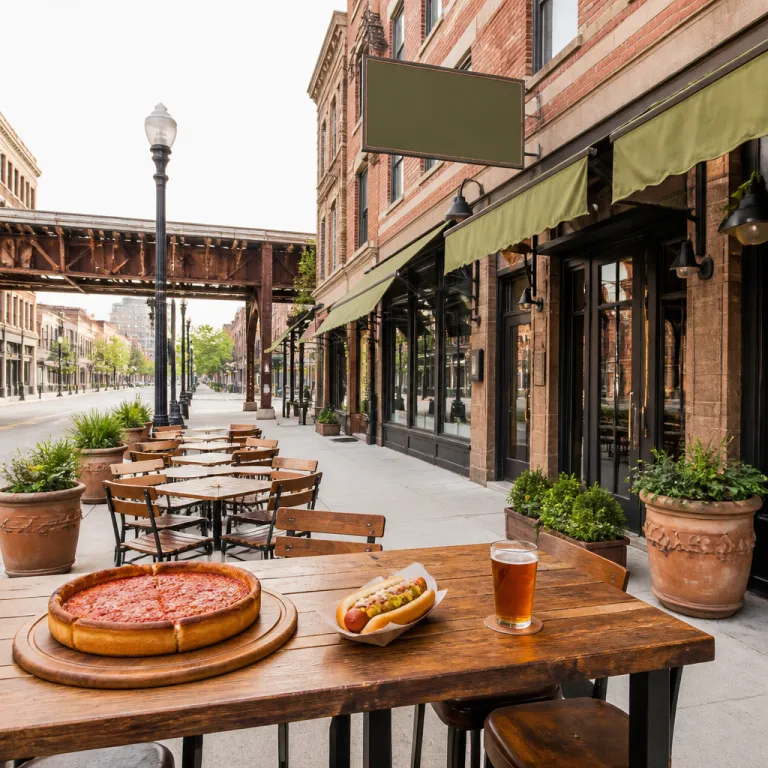
Deep dish pizza is the most famous Chicago export, and you will find several restaurants Chicago locals trust within walking distance of major Loop hotels. Each restaurant has its own style, but the essentials remain the same: a tall, buttery crust, generous cheese, and a rich tomato sauce baked slowly. Because deep dish is so filling, many travellers share one pizza between two or three people, then add a salad or appetiser from the menu.
Italian beef sandwiches are another Chicago classic, usually served on a long roll dipped in savoury jus and topped with sweet peppers or spicy giardiniera. In and near the Loop you will find both traditional stands and modern takes inside a food hall or casual bar restaurant. Ask your hotel concierge to point out their preferred spot on a local map, because staff often know which places handle the meat and bread balance best.
For a more refined Italian restaurant experience, many visitors cross from the Loop into the West Loop or the Near West Side across the river. Alla Vita on West Randolph Street (564 W Randolph St; dinner most nights and weekend brunch) has become a favourite for handmade pasta, wood fired dishes, and a warm, contemporary room that still feels relaxed. While Alla Vita technically sits closer to the West Loop and Fulton Market districts than the central Loop, it is an easy taxi or rideshare ride from most hotels.
When you compare the Loop with the West Loop and Fulton Market, think of the Loop as your base for quick access and the western neighbourhoods as your evening dining playground. The West Loop is famous for restaurant row on Randolph Street, where some of the best restaurants in the city line up side by side. Fulton Market extends that energy with more experimental concepts, wine bars, and late night spots that attract chefs and hospitality workers after service.
Guests who care about food often read guides by local writers such as Jeffy Mai, who track openings and highlight under the radar Chicago restaurants. These articles help you decide whether to stay in the Loop for dinner or venture to the West Loop or South Loop for a change of scenery. Either way, you can return to your hotel knowing you have tasted the flavours that make Chicago restaurant culture so distinctive.
Evening bars and late night spots for hotel guests
After a day of meetings or museum visits, many travellers want to know where to eat in Chicago Loop that also offers a good bar. The central business district may look formal by day, but at night the restaurants and lounges around the Loop reveal a softer, more sociable side. This is when the city’s bar culture becomes part of your overall dining experience.
Prime & Provisions is a strong choice if you want a full service bar restaurant where cocktails matter as much as the steak. The bar area works well for solo travellers who prefer to dine at the counter, while groups can reserve tables in the main room for a more structured evening. Because the restaurant sits close to several major hotels, it often becomes a default meeting spot for colleagues staying in different properties.
Travellers who enjoy hotel style social spaces sometimes head from the Loop towards the West Loop and the private members club Soho House on Green Street. Even if you are not a member, the surrounding streets near restaurant row and Fulton Market are lined with lively bars and late night restaurants Chicago locals frequent. This area offers a different energy from the more corporate Loop, making it a good contrast during a multi night stay.
Within the Loop itself, you will find wine bars, cocktail lounges, and casual spots that stay open late enough for a post theatre drink. Many of these places serve a compact food menu alongside drinks, so you can share pizza, small plates, or desserts without committing to a full second dinner. Ask your concierge for a current map of late night options, because opening hours can shift between weekdays and weekends.
Social media can also help you choose where to go, especially when you see a post shared by locals highlighting a new opening or a seasonal cocktail. A quick search for a bar or restaurant name often reveals a recent post on Instagram that shows the room, the crowd, and the current menu. This kind of visual research is particularly useful if you are choosing between several Chicago Loop spots for a client meeting or date night.
When you compare evening options in the Loop, West Loop, and South Loop, think about your priorities. The Loop offers convenience and proximity to most hotels, the West Loop and Fulton Market deliver high energy restaurant row experiences, and the South Loop provides quieter neighbourhood bars closer to residential streets. Rotating between these areas over several nights lets you experience the full spectrum of Chicago best nightlife without long taxi rides.
Planning your stay with neighbourhoods, maps, and budgets
Choosing a hotel in Chicago often starts with the question of where to eat in Chicago Loop relative to your meetings, events, or sightseeing. Because the Loop sits at the centre of the city’s transport network, it works as a practical base for exploring West Loop, South Loop, and nearby Near West neighbourhoods. Thinking about food at the same time as you choose your hotel will make your stay smoother and more enjoyable.
Begin by looking at a detailed map that shows your hotel, nearby restaurants, and key landmarks such as Millennium Park and the river. Mark at least three Chicago restaurants within a five hundred metre radius that appeal to you, including one casual spot, one mid range restaurant, and one special occasion choice. This simple exercise ensures you always have options within walking distance, even if your schedule changes at the last minute.
Budget is another factor, especially for longer stays or family trips. According to recent survey style data, the average meal price in the Loop sits around twenty five US dollars, though you can spend less at a food hall or more at a steakhouse. Mixing quick lunches at places like Revival Food Hall with one or two splurge dinners at Chicago best restaurants keeps costs under control without sacrificing quality.
When you plan day trips to areas such as West Loop, Fulton Market, or South Loop, align your dining choices with your activities. For example, you might attend a conference near McCormick Place, then head back through the South Loop for Italian beef or pizza before returning to your Loop hotel. On another day you could schedule an afternoon in the West Loop galleries, followed by dinner at Alla Vita or another Italian restaurant on or near restaurant row.
Travellers who like structure sometimes create a simple written guide for themselves, listing restaurants Chicago wide that they want to try, with notes on cuisine, price, and distance. Others prefer a more spontaneous approach, using mobile apps to read reviews and check menus in real time while walking through the Loop. Both methods work, as long as you remain aware of peak times when reservations are strongly recommended.
Whatever your style, remember that the Loop alone contains around two hundred restaurants, cafés, and bars, so you will never run out of options. The key is to balance convenience with curiosity, using the Loop as your anchor while exploring West Loop, Fulton Market, and South Loop when time allows. With a little planning, every craving during your Chicago stay can be matched to the right restaurant, bar, or food hall at the right moment.
Practical tips for reservations, timing, and dietary needs
Once you know where to eat in Chicago Loop in theory, the final step is managing reservations, timing, and dietary preferences in practice. The Loop serves office workers, tourists, and theatre goers, so demand for the best restaurants can spike quickly at lunch and early evening. A few simple habits will help you secure tables and enjoy your meals without stress.
Local authorities and hospitality teams consistently recommend one basic rule: "Make reservations in advance." For popular Chicago restaurants in the Loop and West Loop, booking a table through online systems or calling the restaurant directly is often essential, especially for groups. Even casual spots in Fulton Market and South Loop can fill up on weekends, so plan ahead when possible.
Timing matters as much as reservations, particularly if you are coordinating meals around meetings or theatre performances. Lunch in the Loop tends to peak between twelve and thirteen thirty, while pre theatre dining near Millennium Park and the central theatres is busiest from seventeen thirty to nineteen. If you can eat slightly earlier or later, you will find more menu options, quieter rooms, and sometimes better service.
Dietary needs are widely respected in Chicago, with many restaurants offering vegetarian, vegan, and gluten free dishes. When you read menus online, look for clear symbols or notes, and do not hesitate to call ahead if you have severe allergies. Staff at places like Beatrix, Revival Food Hall vendors, and many West Loop restaurants are accustomed to accommodating special requests.
For travellers who like to document their meals, Chicago’s dining scene is particularly photogenic. Many restaurants design plates, interiors, and bar setups that look striking in a post on Instagram, which can be a pleasant way to remember your trip. Just be considerate of other guests by avoiding flash and keeping photo sessions brief, especially in smaller dining rooms.
Finally, remember that the Loop is only one part of a larger, dynamic city wide restaurant ecosystem. Use it as your reliable base for breakfast, quick lunches, and convenient dinners, then branch out to West Loop, Fulton Market, Chicago West, and South Loop when you want to explore. With this approach, every night of your stay can feel like a carefully curated chapter in your personal Chicago restaurant story.
Key figures about dining in Chicago Loop
- The Loop hosts an estimated 200 restaurants and bars, according to data from the Chicago Department of Public Health, giving hotel guests unusually dense dining options within walking distance.
- The average meal price in the Loop is around 25 US dollars per person, based on Zagat Survey style data, which helps travellers budget realistically for multi day stays.
- Core Loop dining anchors such as Beatrix and Prime & Provisions opened after major downtown investment waves, reflecting the city’s strategy to strengthen central business district hospitality.
- Food halls like Revival Food Hall bring together more than a dozen vendors under one roof, illustrating the rise of multi concept spaces that cater to varied dietary needs in a single location.
- Chicago’s focus on local sourcing and plant based options has grown steadily, aligning Loop restaurants with broader national trends in sustainable and health conscious dining.
FAQ about where to eat in Chicago Loop
Is it necessary to make restaurant reservations in the Chicago Loop ?
Reservations are strongly recommended for popular Chicago restaurants in the Loop, especially at peak lunch hours and early evenings. Steakhouses, Italian dining rooms, and high profile spots in nearby West Loop and Fulton Market often book out several days ahead. For casual counters and food halls you can usually walk in, but checking operating hours before visiting is wise.
Are there good vegetarian and vegan options in the Loop ?
Yes, many restaurants in the Chicago Loop offer vegetarian and vegan dishes, from salads and grain bowls to plant based pizzas. Beatrix and several vendors at Revival Food Hall are known for strong meat free options that still feel indulgent. Always read menus online or call ahead if you have strict dietary requirements or allergies.
Where should I go for classic Chicago deep dish near my Loop hotel ?
Several deep dish pizza chains and independent restaurants operate within or just outside the Loop, all reachable on foot or via a short taxi ride. Ask your hotel concierge to mark their preferred spots on a local map, as staff often know which kitchens handle timing and crust texture best. If you have time, you can also explore nearby neighbourhoods such as South Loop or West Loop for additional pizza options.
What is the difference between dining in the Loop and West Loop ?
The Loop focuses on convenience, business friendly restaurants, and proximity to hotels and Millennium Park, making it ideal for quick lunches and pre theatre dinners. West Loop, especially around restaurant row and Fulton Market, offers a denser cluster of chef driven restaurants, wine bars, and late night spots. Many travellers stay in the Loop for easy transport, then head west in the evening for more experimental dining.
Can I find early breakfast and late night food in the Chicago Loop ?
Early breakfast is easy to find in the Loop, with cafés, hotel restaurants, and places like Egg Tuck opening in time for morning meetings. Late night food is more limited but still available, especially near theatres and major hotels where bar restaurants keep kitchens open later. If you plan to eat very late, consider short rides to West Loop or South Loop, where some kitchens and bars serve food well into the night.
Trusted references
- Chicago Department of Public Health – data on the number of restaurants in the Loop.
- Zagat Survey – average meal pricing and comparative restaurant cost information.
- Choose Chicago (city tourism board) – neighbourhood overviews and official dining guidance.